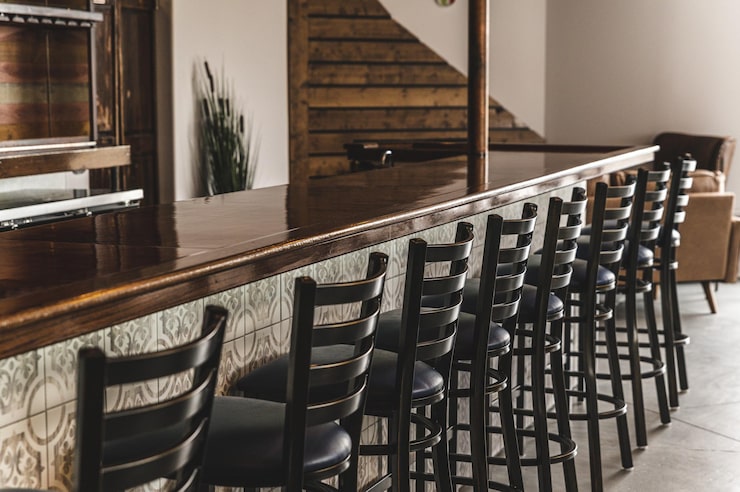
A well-designed seating area can make a kitchen island, breakfast counter, or home bar more comfortable and inviting. Among the many seating options available today, a backless counter height bar stool is especially popular for spaces where simplicity, flexibility, and a clean appearance matter. Its compact design allows the stool to slide neatly beneath a counter when it is not being used, helping maintain an uncluttered room. From modern kitchens to traditional dining spaces, backless stools are available in wood, metal, upholstered, and contemporary finishes. Choosing the right style requires considering height, comfort, construction, materials, and the overall design of your interior.
What Is a Backless Counter Height Bar Stool?
A backless counter height bar stool is a compact seating option designed specifically for counters or kitchen islands that are typically higher than standard dining tables. Unlike stools with supportive backs, these models have a simple seat mounted on a sturdy frame or legs.
The absence of a back gives these stools their distinctive appearance. They often have a minimalist silhouette that works particularly well in modern, contemporary, industrial, farmhouse, and transitional interiors.
Another important characteristic is their height. Counter height stools are generally designed for counters around 34 to 36 inches high. This makes them different from traditional bar stools, which are usually taller and intended for bar-height surfaces.
Because they have no backrest, these stools can be pushed completely under a counter or island. This feature can be particularly useful in kitchens where floor space is limited.
Why Choose a Backless Counter Height Bar Stool?
One of the biggest advantages of this style is its space-saving design. A stool without a backrest can usually fit completely beneath a counter, leaving more open walking space around the kitchen island.
This is particularly helpful in smaller kitchens and apartments. When the stools are not being used, they can remain tucked away instead of extending into the room.
Their simple structure also gives them a visually lightweight appearance. A large chair can sometimes make a kitchen island appear crowded, whereas backless stools create a more open and streamlined look.
Another advantage is versatility. These stools can work in kitchens, dining areas, entertainment spaces, home bars, studios, and even commercial environments. Depending on their material and finish, they can complement a wide range of interior styles.
How to Choose the Correct Stool Height
Height is one of the most important factors when purchasing counter stools. Even a beautifully designed stool can be uncomfortable if its seat is too high or too low for the counter.
For a standard counter that measures approximately 34 to 36 inches from the floor, a seat height around 24 to 26 inches is generally appropriate. This provides enough legroom between the seat and countertop.
It is always useful to measure your counter before purchasing stools. Measure from the floor to the underside or top surface of the counter, depending on the design, and then consider how much space is available for your legs.
A comfortable gap between the seat and countertop helps prevent knees from feeling cramped. If several people will use the stools regularly, comfort should be prioritized over appearance alone.
Measuring Your Kitchen Island
Before selecting a stool, measure both the height and length of your kitchen island or counter. The height determines the appropriate stool size, while the length determines how many stools can fit comfortably.
Spacing is important because people need enough room to sit, stand, and move their arms without bumping into the person beside them.
A general approach is to allow roughly 24 to 30 inches of counter width per person, although the ideal spacing can vary depending on the stool’s design.
If the stools have wide seats, armrests, or thick upholstery, additional space may be necessary. Backless models often make spacing easier because their compact structure does not visually or physically dominate the counter.
Popular Materials for Backless Counter Stools
The material of a stool has a major effect on its appearance, durability, comfort, and maintenance requirements.
Wood is a classic choice that works well with farmhouse, rustic, traditional, and Scandinavian interiors. Wooden stools can feature natural grain patterns, painted finishes, or stained surfaces.
Metal stools are popular in modern and industrial interiors. Steel and iron frames can provide excellent durability while creating a clean architectural appearance. Metal can also be combined with wooden or upholstered seats for a softer look.
Upholstered stools are another option for homeowners who prioritize comfort. Fabric, velvet, leather, and faux leather can give a counter seating area a more luxurious appearance.
Plastic and molded materials can also be useful in contemporary spaces. They are often lightweight and easy to clean, making them practical for busy kitchens.
Wooden Backless Counter Height Stools
Wooden stools remain one of the most versatile choices for kitchen counters. Their natural texture can add warmth to spaces dominated by stone, glass, metal, or other hard surfaces.
Different wood species and finishes can create very different appearances. Light wood can produce a bright and Scandinavian-inspired aesthetic, while darker stains can create a more traditional or sophisticated atmosphere.
Wooden stools should be checked for strong joints and stable construction. A well-made stool should not wobble when someone sits down or shifts their weight.
If the kitchen experiences frequent spills, choosing a stool with a durable protective finish can make cleaning easier and help preserve the surface.
Metal Counter Height Stools
Metal stools are especially suitable for modern and industrial kitchens. Their clean lines and strong frames can complement stainless-steel appliances, exposed materials, concrete countertops, and contemporary cabinetry.
Powder-coated finishes are commonly used because they can provide a durable surface while allowing manufacturers to offer stools in different colors and styles.
Metal stools can sometimes feel harder than upholstered alternatives, so the shape and padding of the seat are important considerations. Some designs incorporate wooden seats or cushions to balance durability with comfort.
Upholstered Backless Stools
An upholstered seat can make a backless stool significantly more comfortable for extended sitting. This can be useful when the kitchen island doubles as a dining or working area.
Fabric upholstery provides a soft appearance and can introduce color or texture into the room. Velvet can create a more luxurious atmosphere, while neutral linen-style fabrics can suit relaxed interiors.
Leather and faux leather are also popular because they can be relatively easy to wipe clean. However, the appropriate material depends on the amount of use and the cleaning requirements of the household.
Families with young children may prefer materials that can be cleaned easily after accidental spills.
Swivel Versus Fixed Stools
Some counter height stools have swivel seats, while others remain stationary. A fixed stool has a simple structure and can provide a classic appearance.
Swivel stools allow the user to rotate without moving the entire stool. This can be convenient when talking with people around the kitchen or moving between the counter and surrounding areas.
However, swivel mechanisms introduce additional moving components. Buyers should look for sturdy construction and a reliable mechanism if they choose this style.
For a minimalist appearance, a fixed backless stool can be an excellent choice. For flexibility and movement, a swivel version may be more practical.
Comfort Considerations
Because backless stools do not provide lumbar support, seat comfort becomes especially important. The shape, width, padding, and surface material can all influence how comfortable the stool feels.
A slightly curved seat can provide better support than a completely flat surface. Cushioned seats can also reduce pressure during longer periods of sitting.
The footrest is another important feature. A properly positioned footrest allows users to rest their feet instead of letting them hang freely.
Even when choosing a simple stool, comfort should not be overlooked. If the counter is frequently used for meals, homework, remote work, or conversations, people may spend considerable time sitting there.
Style Ideas for Different Interiors
Backless counter stools can fit into almost any decorating style when the material and finish are chosen carefully.
For a modern kitchen, consider stools with simple geometric shapes, neutral finishes, and streamlined frames. For farmhouse interiors, wooden stools with natural or distressed finishes can complement the surrounding décor.
Industrial kitchens can benefit from black metal stools or combinations of metal and wood. Contemporary interiors may work well with upholstered seats and sleek metal frames.
In a minimalist space, simple stools in one consistent finish can maintain a clean visual appearance without competing with cabinetry or countertops.
How Many Stools Do You Need?
The number of stools depends on the size of your counter and the amount of personal space available.
A small island may comfortably accommodate two stools, while a larger island may have room for three or more. It is better to leave sufficient space between users rather than trying to fit as many stools as possible.
Consider the shape of the countertop as well. Overhangs, corners, sinks, cooktops, and appliances can reduce usable seating space.
If the island has a narrow overhang, compact backless stools can be especially useful because they require less visual and physical space.
Backless Stools for Small Kitchens
Small kitchens can benefit significantly from backless seating. Because these stools can slide underneath the counter, they help keep pathways clear.
A compact design can also make a small kitchen feel less crowded. Instead of adding large chairs around an island, homeowners can choose stools that almost disappear when not in use.
Light-colored finishes can further contribute to an open appearance, while simple silhouettes reduce visual clutter.
When space is limited, it is also worth considering the stool’s overall footprint. A seat may be compact, but wide legs or a large base can still occupy considerable floor space.
Maintenance and Cleaning
The maintenance requirements depend largely on the stool’s material.
Wood should generally be cleaned with a soft cloth and an appropriate cleaner suitable for the finish. Excess moisture should be avoided because prolonged exposure can damage certain wooden surfaces.
Metal stools are often relatively easy to maintain. A damp cloth can remove everyday dust and spills, while manufacturer-recommended cleaning products can be used for more stubborn marks.
Upholstered stools require more attention. Spills should generally be addressed quickly to reduce the chance of staining. Always follow the manufacturer’s cleaning instructions because different fabrics and finishes can respond differently to cleaning products.
Regularly checking screws, joints, and footrests can also help maintain stability over time.
Safety and Stability
A counter stool should be stable enough to support regular use without wobbling or tipping. Construction quality is particularly important with backless designs because users cannot rely on a backrest for additional support.
Look for a sturdy base, strong joints, and a properly positioned footrest. If the stool has adjustable components or a swivel mechanism, make sure these parts operate smoothly.
Non-slip feet can also protect flooring and reduce unwanted movement. They are particularly useful on hard surfaces such as tile, hardwood, or polished concrete.
Choosing the Right Color
Color can change the entire appearance of a kitchen seating area. Neutral shades such as black, white, gray, beige, and natural wood can blend easily with different interiors.
Bold colors can be used when the stools are intended to become a focal point. Deep green, navy, muted blue, or warm terracotta can add personality without requiring major changes to the kitchen.
When choosing a color, consider the countertop, cabinetry, flooring, lighting fixtures, and nearby furniture. The stool does not necessarily need to match everything, but its finish should work harmoniously with the overall room.
Are Backless Counter Stools Comfortable?
However, they do not provide back support, so they may not be ideal for everyone during very long periods of sitting. If the kitchen counter is mainly used for short meals, coffee, casual conversations, or quick tasks, a backless design can be perfectly practical.
For extended sitting sessions, a cushioned seat and ergonomic dimensions become more important.
Backless stools can be comfortable when they have the correct height, supportive seat shape, appropriate padding, and a convenient footrest.
How to Create a Coordinated Kitchen Look
One effective approach is to connect the stools visually with another element in the room. For example, wooden stools can complement wooden shelving or cabinetry, while black metal stools can coordinate with dark hardware and lighting fixtures.
The goal does not have to be exact matching. Mixing materials can create a more layered and interesting interior.
A kitchen with white cabinets and a stone countertop, for example, could be paired with natural wood stools for warmth or black metal stools for stronger contrast.
Frequently Asked Questions
What height should a backless counter height bar stool be?
A typical counter-height stool has a seat height of approximately 24 to 26 inches. This range generally works well with counters around 34 to 36 inches high. However, measuring your specific counter before buying is the best way to ensure proper fit and legroom.
How many backless stools fit around a kitchen island?
The number depends on the length of the island and the width of each stool. Allowing approximately 24 to 30 inches of counter space per person can provide comfortable spacing in many situations, although wider stools may require additional room.
Are backless stools good for small kitchens?
Yes. Their compact shape allows them to slide underneath the counter when they are not being used. This can help preserve walking space and make a smaller kitchen feel more open.
Are wooden counter stools durable?
Well-constructed wooden stools can be very durable. Their longevity depends on the quality of the wood, joinery, finish, and everyday use. Regular maintenance can also help preserve their appearance.
Are upholstered stools difficult to clean?
Cleaning depends on the upholstery material. Some fabrics require specialized care, while leather and faux leather can generally be wiped more easily. Always follow the manufacturer’s care instructions.
Should counter stools have a footrest?
A footrest is highly recommended for comfort. It gives the feet a stable place to rest and can make sitting more comfortable, especially when the stool is used for meals or conversations.
Can backless stools be used at a dining table?
They can sometimes be used at non-standard-height tables, but traditional dining tables are generally designed for standard dining chairs. A counter-height stool is intended for a higher surface, so checking the table height is essential before using one.
Are swivel stools better than fixed stools?
Neither option is universally better. Swivel stools provide easier movement, while fixed stools typically have a simpler construction and straightforward appearance. The right choice depends on how the seating area will be used.
How do I know if my counter is counter height?
A typical counter-height surface is around 34 to 36 inches high. Measuring from the floor to the countertop will help you determine whether counter-height seating is appropriate.
Can backless counter stools work with modern kitchens?
Yes. Their clean, minimal silhouette works particularly well with modern and contemporary kitchens. Metal, upholstered, molded, and simple wooden designs can all complement modern cabinetry and countertops.
Final Thoughts
A backless counter height bar stool can combine practicality, space efficiency, and style in one simple piece of furniture. Its ability to slide beneath a counter makes it particularly useful for compact kitchens, while its wide range of materials and finishes allows it to work with almost any interior design approach. The most important considerations are correct seat height, comfortable dimensions, sturdy construction, suitable materials, and enough spacing between stools. By measuring your counter carefully and considering how the seating area will actually be used, you can choose stools that provide both everyday convenience and a polished appearance.
One thought on “Backless Counter Height Bar Stool: A Complete Guide”